Afterglow
Blog Contact
Act One · Before the start

Why running in the dark turned into a full nightlife event

Afterglow looks at how the humble 5k evolved into something closer to a music festival once someone decided to run it after sunset – glow gear, DJs at the start line, and a party built right into the finish chute.

5–10K
Typical distance options offered at a night race
Dusk
Standard start time, timed to finish after full dark
1
After-party built directly into the finish line
Act Two · The run itself

What actually happens on the course

A night race is timed so the field starts at dusk and finishes once darkness has fully settled in – a deliberate choice, since the entire visual identity of the event depends on runners actually being visible in the dark, wearing glow gear the organizers hand out at registration.

Course design also shifts for this format: routes tend to favor well-lit park loops or urban corridors with reliable street lighting over trail terrain, since footing hazards that are minor in daylight become genuinely risky once the sun is down.

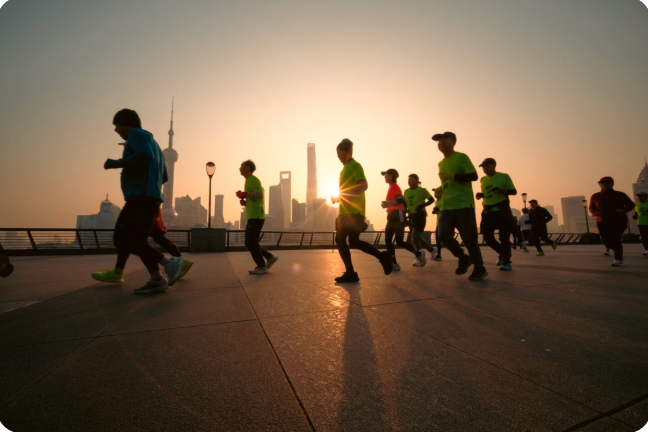
Runners at dusk wearing glow accessories on an urban path
Image unavailable

Pacing at a night race also tends to run slower on average than a comparable daytime 5k or 10k, partly because visibility limits how confidently runners push their stride, and partly because a meaningful share of the field is there for the atmosphere first and the finish time a distant second.

What to actually wear

  • Reflective or glow-in-the-dark outer layerNot optional at most events – often required for safety on open road sections.
  • Headlamp or clip-on lightEven on lit courses, a personal light helps with footing on uneven pavement.
  • Lighter shoes than usualSlower average pace means less need for max-cushion trainers built for speed work.
  • A layer for after, not duringEvening temperatures drop fast once you stop moving at the finish line.
Act Three · The after-party

Why the finish line isn't really the end

Unlike a conventional road race, where the event is essentially over once results post, a night race is built around what happens after the timing mat – live music, food and drink vendors, and often a set of party games set up specifically to keep the crowd on site rather than heading straight home.

This structure changes who the event is actually built for. A conventional race optimizes for the runner chasing a personal best; a night race optimizes for the experience around the run, which is part of why registration numbers for this format skew toward first-time or casual runners rather than competitive ones.

"The run gets you there. The party is why people come back the next year."

A pattern commonly observed across night race events, not a quote from any specific organizer.
From the blog View all →
The full piece

Why night races grew fastest right when daytime road races started shrinking
Crowd celebrating at a finish line party at night
Image unavailable — replace with a licensed photo before publishing.

Road racing as an industry has spent much of the last decade fighting a quiet problem: fewer people signing up for the traditional Saturday-morning 10k. Night races, oddly, grew during roughly the same stretch – which suggests the format wasn't competing for the same audience at all.

The audience shift nobody planned for

Traditional road races have long skewed toward runners already comfortable calling themselves runners – people training for a specific time, often repeat participants in a local running club. Night races, built around music and a party atmosphere, pulled in a meaningfully different crowd: people who wanted a social night out that happened to involve moving five or ten kilometers.

Sponsorship logic that only works after dark

A daytime race sponsor gets a logo on a t-shirt and a banner at the start line. A night race sponsor gets something harder to buy elsewhere: a captive, celebratory crowd standing around a finish-line party for an hour or more after the run ends, which is part of why beverage and lifestyle brands in particular have gravitated toward sponsoring this specific event format.

The logistics problem most organizers underestimate

Running a 5k after dark multiplies the safety planning involved compared to a daytime event – adequate lighting along the entire course, clearly marked hazards, and enough on-course marshals to handle a field moving at uneven, often slower paces than a typical daytime road race field. Events that cut corners on this front tend not to survive past a season or two.

A real example from the format's history

Night Race was a branded night running series in Canada that offered 5k and 10k run/walk events at dusk in multiple cities, featuring glow-in-the-dark elements, a finish-line after-party with games like giant beer pong and giant Jenga, and support from national sponsors. Afterglow is not affiliated with Night Race or any of its sponsors; it is cited here purely as a real, publicly documented example of the night race format described throughout this article.

What the format's staying power actually depends on

Unlike a marathon, which draws much of its appeal from personal achievement and a fixed, well-known distance, a night race's appeal is tied closely to the specific experience an organizer builds around it – which means the format's long-term survival depends less on running culture broadly and more on whether any given event keeps that experience worth returning for, year after year.

This article describes general patterns in the night race event format and does not represent, endorse, or promote any specific event, brand, or sponsor.